

Not All Heroes Look Human
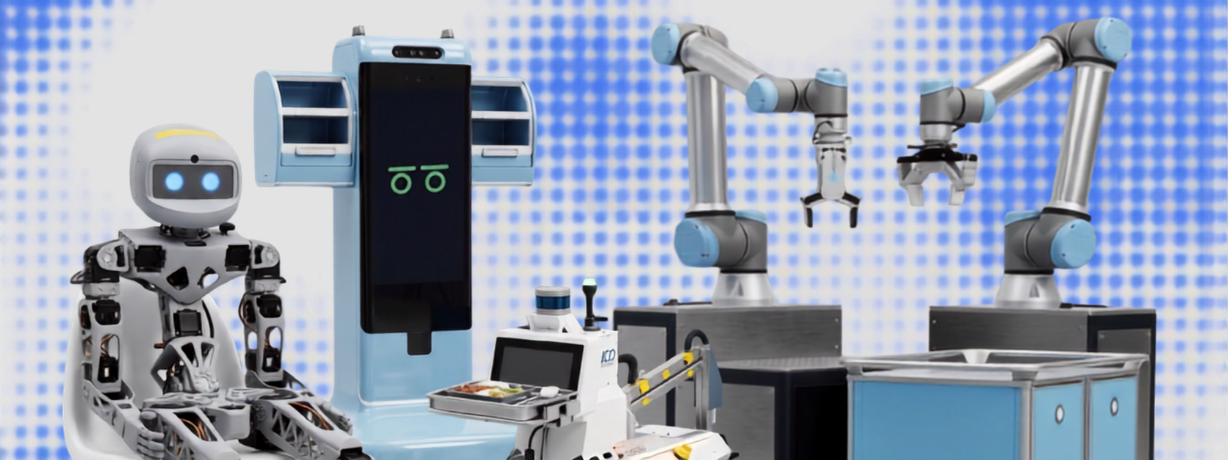
Metal face and awkward strides: humanoids are the celebrities of the robotics world. They fuel people’s excitement about an irresistible future reminiscent of our favorite sci-fi movies, where machines exist alongside us as human-like counterparts. Yet this fascination with humanoids can narrow our understanding of what a robot should be.
It’s time to see robots for what they really are.
In the real world, form follows function. A robot’s shape and movement are determined by where it works, what it does and the human problem it is meant to solve. Many of today’s most useful robots have no faces at all and remain mostly hidden, inside facilities most of us will never enter.
Too Hot to Handle
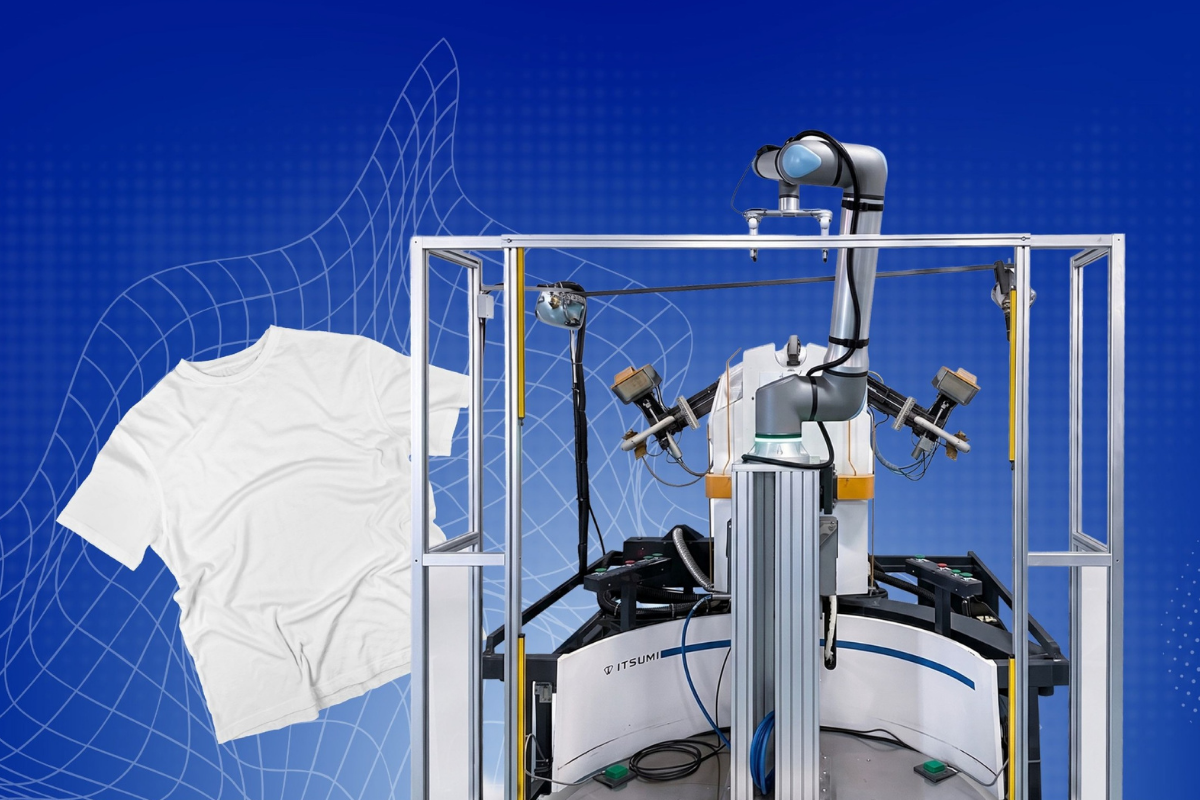
In an industrial laundry, “fresh from the press” means almost too hot to touch. Sheets and uniforms can emerge at close to 70°C, yet they must be handled immediately to preserve a crisp, crease-free finish. But this exposes workers to relentless heat, burn risks and repetitive physical strain.
Park company IG Inno’s laundry folding robot takes over at the hottest point. Synchronised with the press cycle, it unloads each batch while maintaining enough fabric tension to prevent creases. With this, workers no longer have to stand beside the heat performing the high-risk motion, while maintaining the same production speed.
A Final Journey, Reimagined
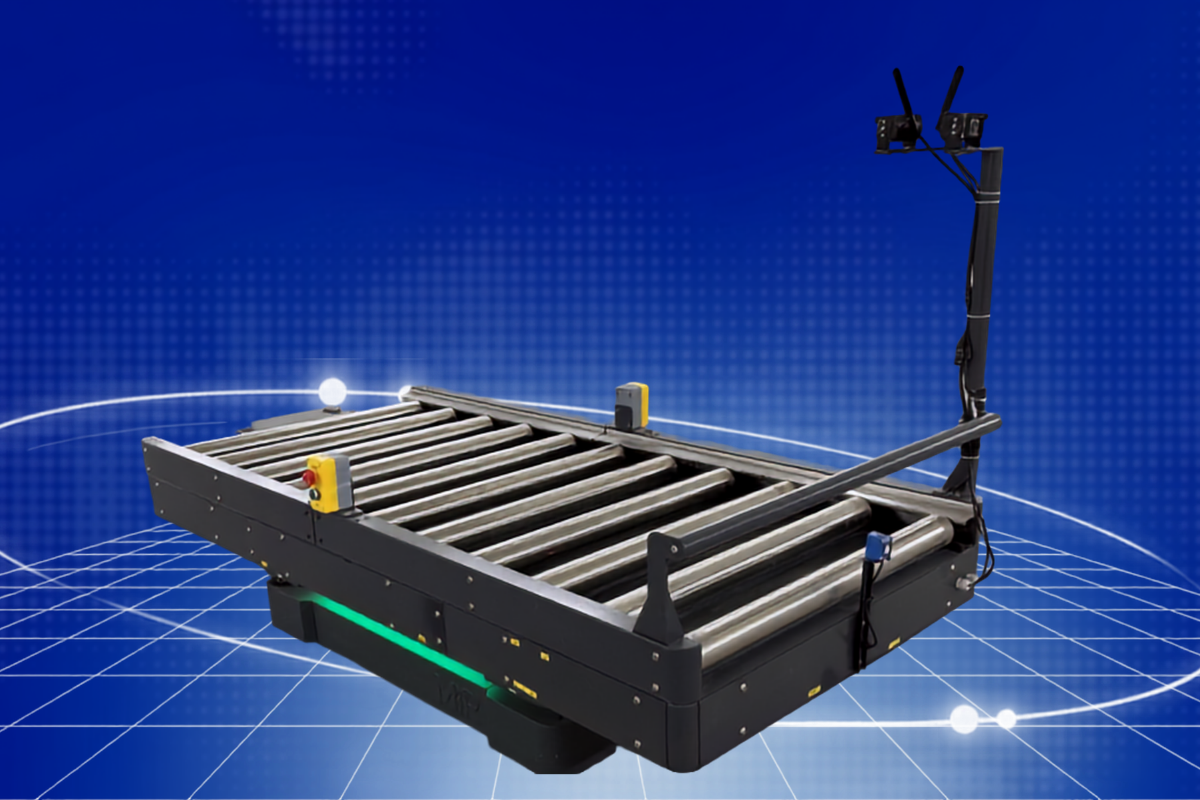
At Diamond Hill Crematorium, managed by the Food and Environmental Hygiene Department, an unusual member of staff moves quietly through the corridors. Its responsibility: transporting coffins safely and discreetly through the facility.
Also built by IG Inno, the autonomous mobile robot needs no tracks, floor markings or structural guides to find its way: using laser scanners positioned at its front and rear, it maintains a 360-degree view of its surroundings, responding to obstacles without bringing the journey to a halt. Facility operators can follow every movement from the main control room and take control wirelessly whenever needed.
Even without humanoid features, this robot carries out a profoundly human responsibility, handling it with care, precision and discretion.
Leaving the Hatch to the Robot
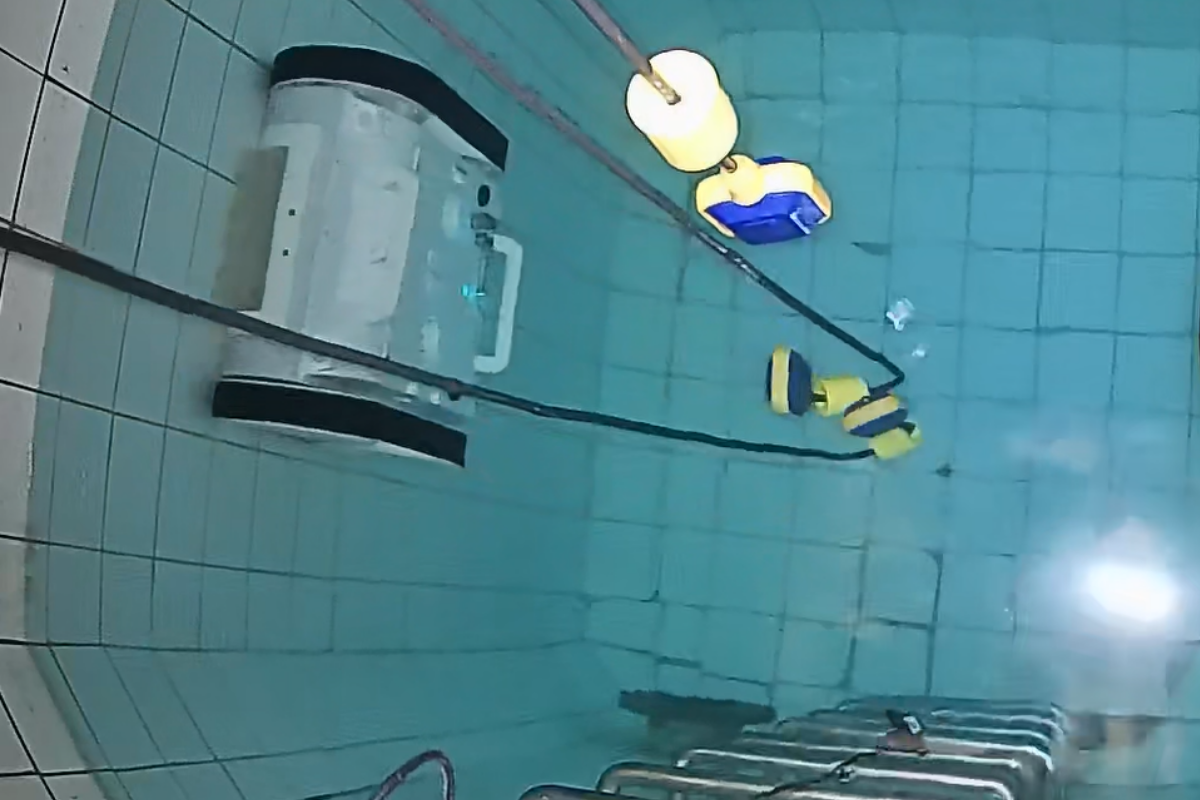
Most people never give their building’s water tanks a second thought. Yet every three months, workers must enter these confined spaces to clean them, despite the range of different risks.
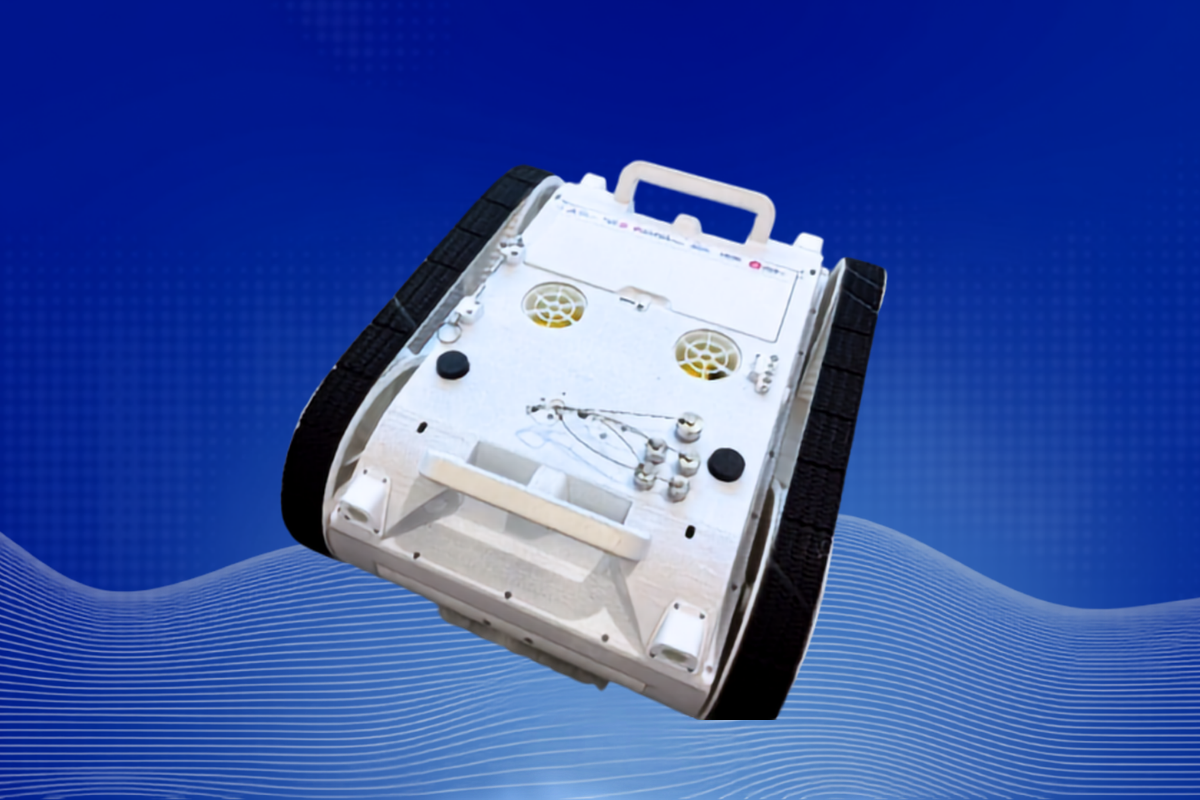
The Water Tank Cleaning Robot, developed by Park company Hong Kong Center for Construction Robotics (HKCRC) and co-developed by Architectural Services Department, Electrical and Mechanical Services Department, Housing Department and Hong Kong Housing Society, offers a safer way to do the job. It carries out the cleaning inside the tank, allowing the crew to operate without entering the confined space themselves. The essential maintenance task stays on schedule, but cleaning crews are spared the health and safety risks.
From Hidden Corners to a Global Shift
Different as they appear, these robots share the same origin story. Each began with a real operational problem and needed technology, investment and a partner willing to test a new solution. Together, they offer a practical glimpse of physical AI: machines that can sense, respond and act in the real world.
Hong Kong brings all these ingredients close together. Within one compact, highly connected city, robotics ventures can test their solutions across factories, commercial buildings, transport infrastructure and public facilities. Here, prototypes encounter the hazards, people and established routines that laboratories cannot fully reproduce.
These local applications are part of a wider shift. According to the International Federation of Robotics, Hong Kong ranked among the world’s ten most automated economies in 2022. That same year, Asia recorded 168 operational industrial robots per 10,000 manufacturing employees, ahead of the global average of 151.1 Robotics investment has continued to grow, reaching a record USD 40.7 billion in 2025, according to CB Insights.2
Hong Kong’s edge lies in proximity: researchers, investors, technology ventures and industry partners are all within close reach. HKSTP orchestrates these connections, matching the needs of over 500 partners with solutions from more than 2,500 I&T companies (including 130 in robotics) and bringing promising technologies into living labs for real-world testing. Beyond market access, we supercharge robotics R&D through the Robotics Catalysing Centre (RCC) at Hong Kong Science Park, offering a plug-and-play FlexLab equipped with high floor-loading capacity, high ceiling clearance, and dedicated power and exhaust infrastructure. Designed with modular layouts and adaptable lease terms to lower entry barriers for early-stage prototyping, these spaces allow innovators to efficiently build, test, and refine robotics before scaling and deploying them in real-world scenarios.
From hidden corners of the city to warehouses around the globe, Hong Kong gives robots a place to prove their value as well as a well-supported pathway into international markets.
Discover the right robot solution for your business
1 Source: International Federation of Robotics, World Robotics 2023, based on 2022 data and published January 10, 2024.
2 Source: CB Insights, 2025 robotics funding data.