/-/media/corpsite/assets/hkstp-logo/hkstp_logo_25_v2_white_0810v2.svg?mw=1980&rev=2a340e7fbf814bbbab9ab7fe854878c7&hash=3E4F85D867EE687322D4B7496A0A452D

7 of 10

Market leaders in advanced industries ¹

World's #1

AI patents ²

43%

China's share of global manufacturing jobs by 2050 ³

11% of China's GDP

GBA GDP: RMB 15 tn ⁴

World's #1

Global innovation cluster HK-SZ-GZ in 2025 and 2026 ⁵
VIEW ALL VIEW LESS
 
1ITIF (https://itif.org/publications/2024/09/16/china-is-rapidly-becoming-a-leading-innovator-in-advanced-industries/)
2HK Economic Times (https://money.udn.com/money/story/5603/9126954)Source: Global Times (https://www.globaltimes.cn/page/202511/1347686.shtml
3Center For Global Development (https://www.cgdev.org/article/global-manufacturing-has-likely-peaked-even-poor-countries-new-study-finds)
4bayarea.gov.h (https://www.bayarea.gov.hk/en/about/overview.html#:~:text=The%20total%20area%20is%20around,RMB%2014.5%20trillion%20in%202024)
5WIPO (https://www.wipo.int/en/web/global-innovation-index/2026/innovation-clusters)

More About GBA

International I&T Hub

The outline of the National Fifteenth Five-Year Plan (2026-2030) was deliberated and adopted by the Fourth Session of the 14th National People's Congress in March 2026 and indicates clear support to develop Hong Kong as an international innovation and technology (I&T) hub and a global hub for high-calibre talent.

As a key engine driving China’s high-quality development, the Guangdong-Hong Kong-Macao Greater Bay Area (GBA) will receive continued support during the National Fifteenth Five-Year Plan period to leverage its role as a core engine in regional coordinated development. Hong Kong is actively integrating into the development of the GBA to achieve efficient collaboration between the innovation and industrial chains, thereby driving the deep integration of sci-tech innovation and industrial innovation.

Northern Metropolis: New engine for I&T growth

The HKSAR government’s Northern Metropolis Development Strategy has created the San Tin Technopole as a new engine for the future development of Hong Kong. The Northern Metropolis serves as an important base for promoting the development of I&T industries, supporting Hong Kong in establishing a new industry pattern of "South-North dual engine (finance-innovation and technology)". It also facilitates high-quality economic co-operation between Hong Kong and the GBA, the driving force for Hong Kong’s next era of economic growth.

The powerful synergy of the GBA

In 2019, the "Guangdong-Hong Kong-Macao Greater Bay Area Development Plan" was officially issued and implemented, announcing that the Greater Bay Area consists of nine cities in Guangdong Province, Guangzhou, Shenzhen, Zhuhai, Dongguan, Foshan, Zhongshan, Huizhou, Jiangmen, Zhaoqing, and two special administrative regions - Hong Kong and Macao.

Economic integration will pool together the complementary strengths of the GBA cities to create a strong clustering effect. Tech companies will be able to access an integrated pool of innovation resources from the region – from R&D expertise to manufacturing capacity and tax breaks – and tap the GBA synergy to enhance their competitiveness.
Greater Together

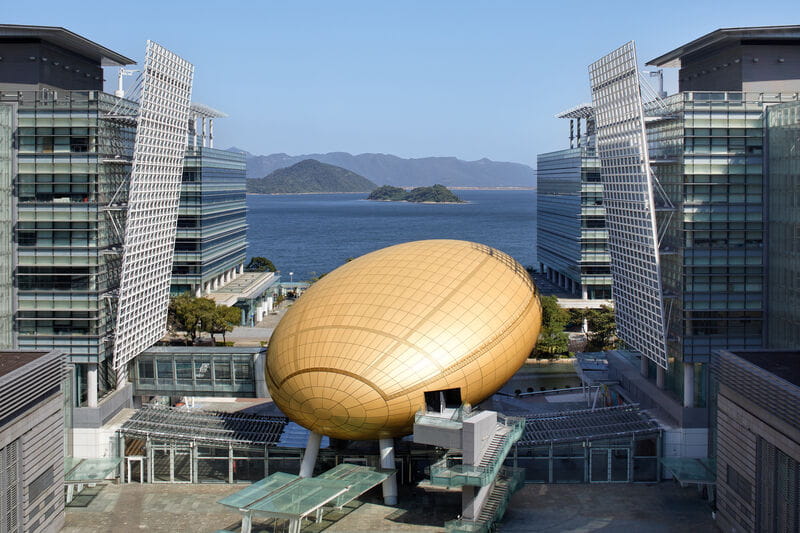
“One Ecosystem” – Hong Kong Science Park;
“Two Cities” – Hong Kong and Shenzhen.

“One Ecosystem, Two Cities” is the development principle we uphold – driven by the close collaboration between Hong Kong Science Park and our Shenzhen Branch, we join forces to create greater value.

At HKSTP, we bridge Hong Kong and Shenzhen as one cross‑border innovation ecosystem, enabling resource sharing, complementary strengths, and co‑creation that generate value far greater than the sum of its parts. Our ecosystem connects startups and established enterprises alike, while our “Bringing In” and “Going Global” initiatives help international innovators enter the Chinese Mainland and support local entrepreneurs to expand into global markets.

image

Bringing In

We provide one‑stop landing support for global innovators to help you enter the Chinese market efficiently. Leveraging the cross‑boundary platform of Hong Kong Science Park and its Shenzhen Branch, we offer comprehensive policy advisory, flexible soft‑landing office and business support, as well as resource matching between Hong Kong and Shenzhen. This enables fast market entry, steady growth, and seamless integration between localisation and globalisation.​
​

LEARN MORE
image

Going Global

Our one-stop Go Global platform designed to gear innovators for international success. Programmes such as Go Global Bootcamp and Market Discovery accelerate growth and commercialization.​

LEARN MORE
Photo-3_v2

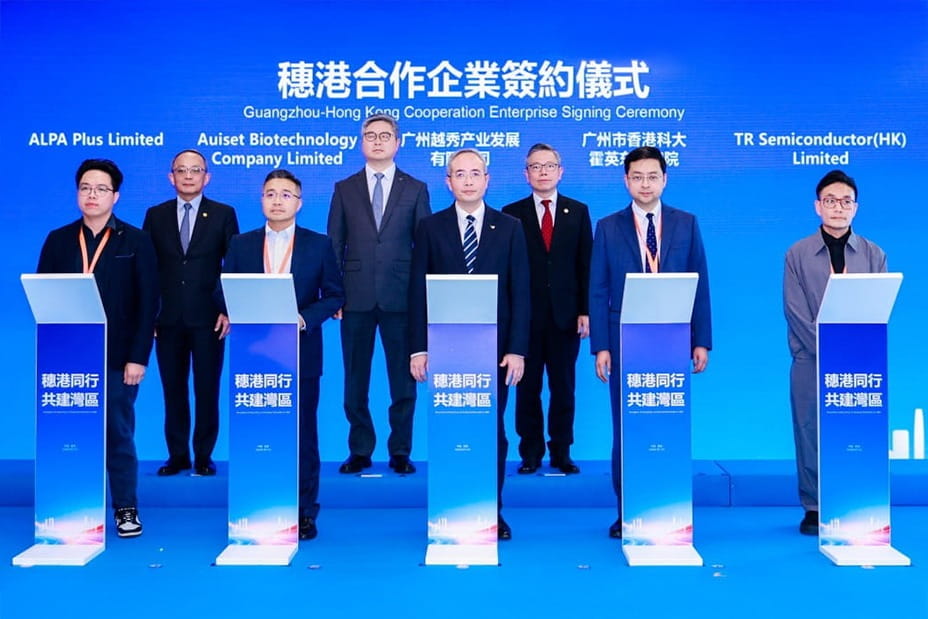
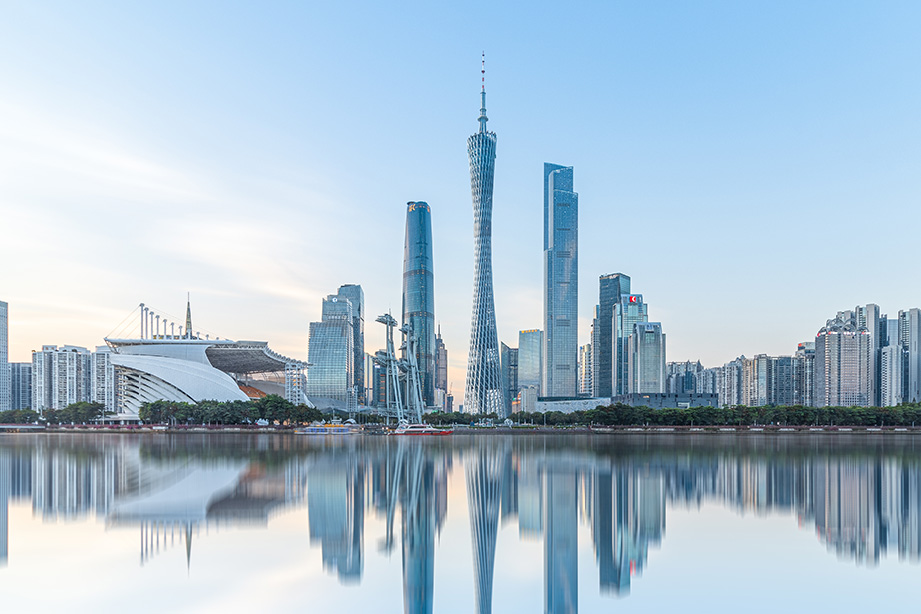
Guangzhou | Guangzhou–Hong Kong I&T Collaboration Platform

HKSTP, Yuexiu Group and HKUST established the Guangzhou–Hong Kong I&T Collaboration Platform, connecting both cities through a “one platform, two centres, N funds” model. The Hong Kong centre focuses on R&D incubation and international expansion, while the Guangzhou centre advances commercialisation, industry matching and real-world deployment. Ten companies have signed agreements to establish a presence at the joint innovation centre.

hangzhou - 2

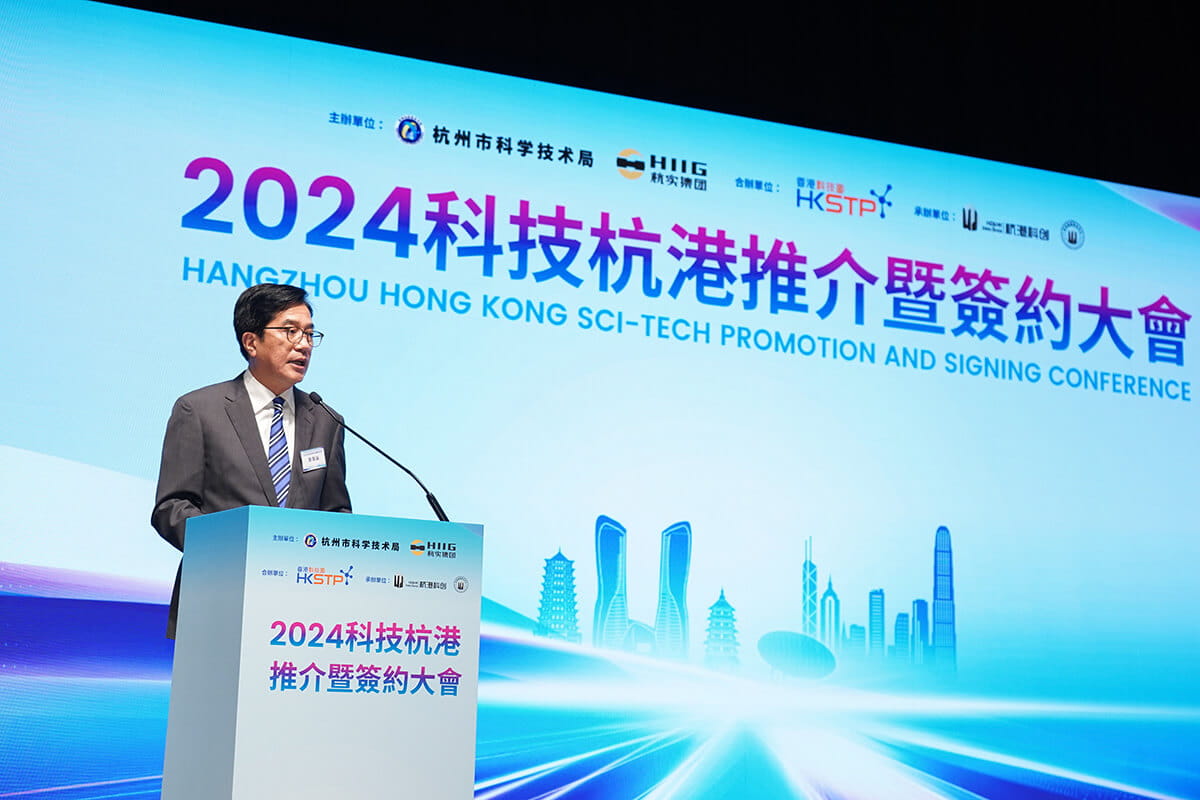
Hangzhou | Hangzhou-Hong Kong I&T Collaboration Platform

HKSTP and Hangzhou Innovation Incubation Center (Hong Kong) Limited established a co-incubation partnership to deepen Hangzhou–Hong Kong collaboration across talent, research, funding, and government–industry–academia–research networks. It helps technology ventures from Zhejiang and Hangzhou use Hong Kong as an international launchpad to access global talent and resources and expand overseas.

Frequently Asked Questions

1. Where is the Shenzhen Branch located?

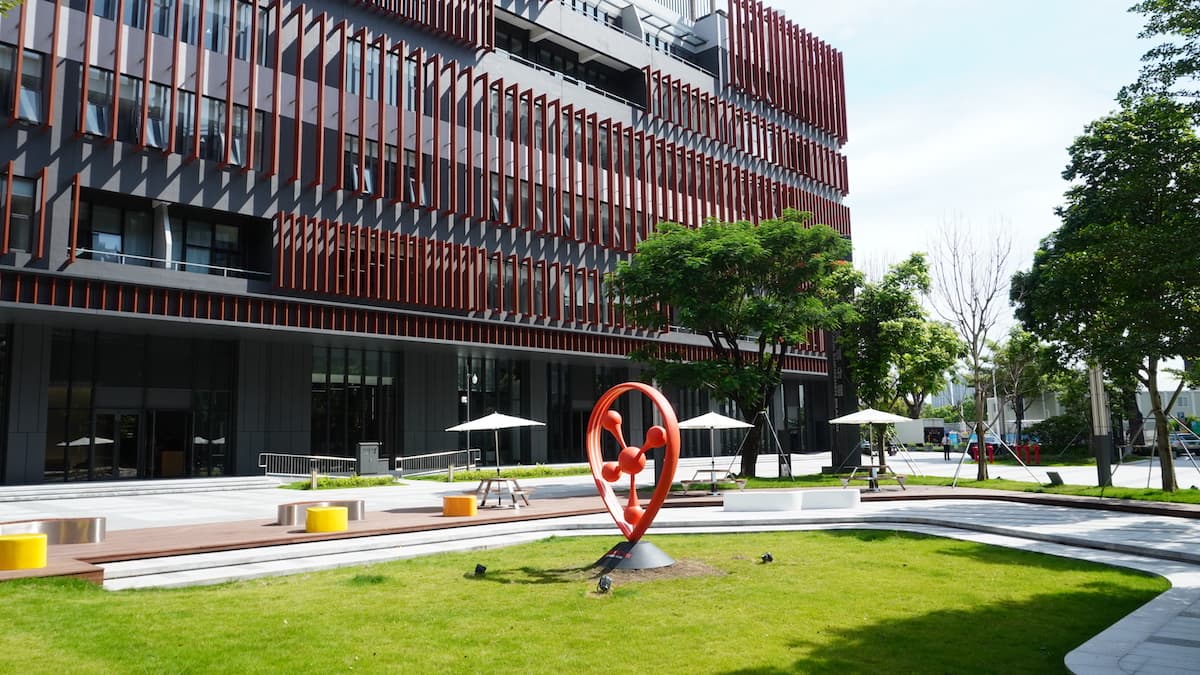
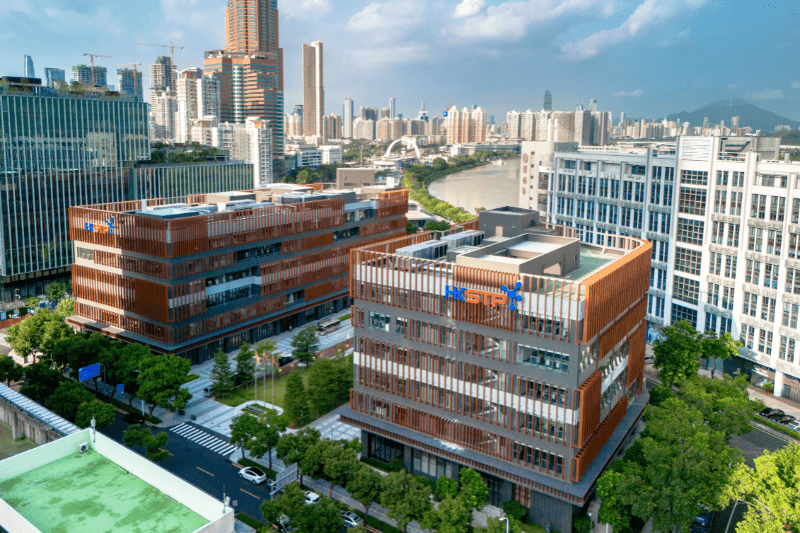
Our Shenzhen Branch is located in Futian (Bonded area), Shenzhen — specifically in the Hetao Cooperation Zone's Shenzhen Park, directly adjacent to the Hong Kong SAR and nestled along the Shenzhen River. Positioned within the GBA's cross boundary innovation corridor, it offers convenient access to both Hong Kong and Chinese Mainland.

2. Why build across Hong Kong and Shenzhen — and why choose our Shenzhen Branch as your gateway to Chinese Mainland?

Hong Kong and Shenzhen offer distinct yet complementary strengths — from global finance and IP protection to manufacturing scale and market access. Our Shenzhen Branch puts these advantages within easy reach, providing office space, soft-landing service, cross border business support, and TecONE policy consultation, backed by local knowledge to help you navigate the cross border innovation landscape.

3. How can Shenzhen Branch support your entrepreneurial journey?

We offer ready-to-move-in offices, bare-shell lab spaces, co-working areas, and meeting and event venues. Our goal is to make your market entry and operational setup in the GBA as efficient as possible — with guidance every step of the way.

4. How can a technology company test the Mainland market before setting up a full operation?

A company can begin with a defined target sector, customer profile, preferred city and validation goal, then use soft-landing space and local business support to explore the market. It can seek introductions for customer discussions, demonstrations or pilots before deciding on a larger operational setup. Any pilot should have an agreed scope, timeline, success measures and commercial responsibilities.

5. How can a hardware startup connect with manufacturers and supply-chain partners in the Greater Bay Area?

The startup should prepare a product brief covering its prototype status, engineering requirements, expected volume, quality standards, certification needs, budget and timeline. It can then discuss cross-border resource matching with the HKSTP team and identify relevant engineering, pilot-production, manufacturing or supply-chain connections in the GBA. Commercial and technical due diligence remains the company’s responsibility.

6. Where is Hong Kong Science Park Shenzhen Branch, and what facilities does it provide?

The Shenzhen Branch is in the Futian Bonded Area within the Shenzhen Park of the Hetao Cooperation Zone, next to Hong Kong and the Shenzhen River. It provides ready-to-move-in offices, bare-shell laboratory spaces, co-working areas, and meeting and event venues, supporting companies that are exploring market entry and operations in the GBA.

7. What should a foreign technology company prepare before entering the Chinese Mainland market?

The company should define its target customers, city, entry model, local partners, staffing, supply-chain needs, budget and validation milestones. It should also review intellectual-property protection, data and cybersecurity requirements, licensing, tax, employment and other applicable regulations with qualified advisers. HKSTP can provide policy consultation and ecosystem connections, but company-specific legal, tax and compliance advice should come from licensed professionals.

8. How can a Mainland technology company use Hong Kong to expand internationally?

A Mainland technology venture can use Hong Kong as an international platform to access global talent, resources, business partners, capital and overseas markets. HKSTP’s Go Global platform—including programmes such as Go Global Bootcamp and Market Discovery—supports market learning, international connections and commercial expansion. The Hong Kong–Shenzhen ecosystem and collaboration platforms in Guangzhou and Hangzhou can also connect research, incubation and industry resources with overseas-growth opportunities.