

2026年09月10日
Hong Kong aims to scale its tech ecosystem and nurture more unicorns: HKSTP CEO (僅提供英文版本)

Hong Kong is intensifying efforts to attract technology start-ups and nurture unicorns through expanded financial support via a key government-backed platform, leveraging the city’s booming fundraising activities and world-class financial infrastructure.
Investors are displaying an increased appetite for the local tech scene compared with a decade ago – a trend that Terry Wong Ping-sau, CEO of the Hong Kong Science and Technology Parks Corporation (HKSTP), said was a positive sign for the city’s broader innovation and technology (I&T) ecosystem. “Traditional enterprises and family offices, in particular, are showing huge enthusiasm, driven by the transformation needs of the next generation taking over Hong Kong family businesses that traditionally ran conventional operations,” Wong told the South China Morning Post. “Many actively reach out to us.
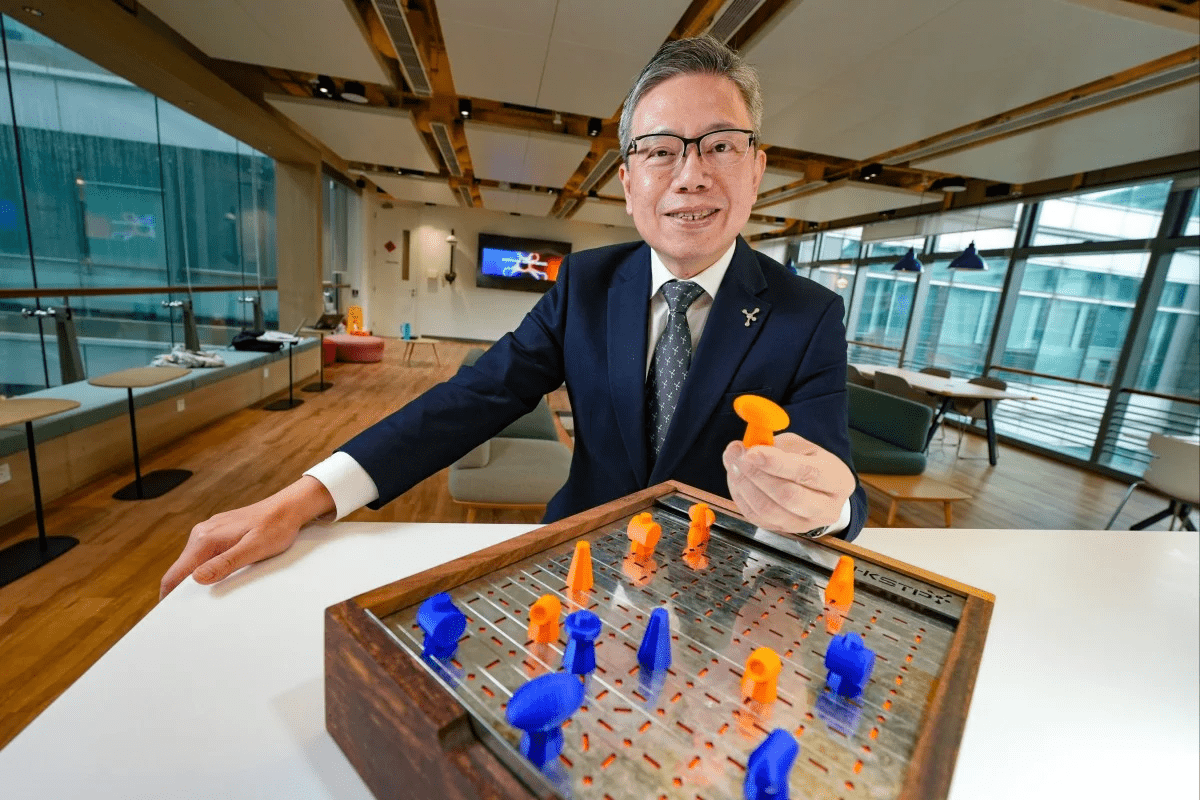
“As an ecosystem hub, we can provide them with insights on I&T developments and introduce various investment opportunities.” Compared with Hong Kong’s fundraising prowess – the city helped firms raise about HK$285.8 billion (US$36.4 billion) via new listings last year – Wong noted that there was still room to improve in early-stage financing. The HKSTP was established in 2001 as a statutory body to bolster the I&T ecosystem by connecting stakeholders, nurturing talent and providing facilities for research and development.
Along with local fintech hub Cyberport, the HKSTP is a key I&T flagship that has nurtured more than a dozen unicorns – privately held start-ups with a current valuation of US$1 billion or more – such as SenseTime in artificial intelligence, Lalamove in logistics and Insilico Medicine in AI drug discovery, as well as 17 initial public offering cases, according to HKSTP’s 2024-2025 annual report. To maintain Hong Kong’s competitiveness in nurturing high-potential start-ups, Wong said the city needed to accelerate the commercialisation of products.
“This is also the direction where we hope to achieve a major breakthrough in the medium term – nurturing more high-quality large enterprises, even unicorns, and driving their listings,” he said. “I believe the next eight to 10 years will be a golden era for Hong Kong to produce more high-quality, large-scale tech enterprises, as many current start-ups already show high potential.” The HKSTP has built a wide range of funding channels to attract more start-ups, including a corporate venture fund established in 2018 that has since raised more than HK$170 billion.
Every HK$1 it invests attracts HK$13 from the private market, the corporation claimed, adding that it had more than 500 corporate partners and 210 active investors. In April 2025, the government-funded platform also launched Hong Kong’s first public-private partnership fund for I&T – the Co-Acceleration Programme – which has attracted nine corporate limited partners to co-invest.
Wong said that, under the programme, companies receiving investment may not originally be based in Hong Kong, but after securing funding, they must set up operations at the Hong Kong Science Park.
“This is an efficient and high-quality way for us to proactively find and bring overseas I&T companies with potential to Hong Kong to continue their research and development,” Wong added.
Wong expressed confidence in the Hong Kong government’s target of boosting the number of locally based unicorn enterprises to 30 by 2032, as the park strengthens its positioning as an “ecosystem orchestrator” to proactively build the I&T ecosystem.
A recent study, conducted jointly by the HKSTP and technology market intelligence firm CB Insights, found that Hong Kong companies showed the strongest growth momentum among Asian markets, followed by Taiwan and Singapore, and several companies in the HKSTP were ranked in the global top 10 per cent.
At the same time, capital is concentrating on fewer, larger bets. Overall tech funding in Asia jumped 157 per cent, year on year, in the first half of 2026, while the deal count dropped by 22 per cent, according to the joint study’s findings.
John Kelly, managing director and senior vice-president of client innovation at CB Insights, said the shift towards larger deals was a sign of a maturing capital market. Once the venture capital and private equity network matures, he said, “the capital returns from large deals will flow back into early-stage and seed-round investment”. Start-ups should improve information transparency and leverage data and AI evaluation tools to help global investors uncover their value, Kelly added.
Source: SCMP